This is an anecdote about an experience I once had which impressed me, but which I have never known exactly what to make of. I always think about it at this time of year, near the solstice, when sunlight is at minimum, and shadow length is at maximum. It is related to a topic in academic philosophy, phenomenology, and I am sure that if I understood my Husserl and my Heidegger a bit better than I do, I could make a much more systematic presentation of it than I can here. With that disclaimer, here is the story.
Several years ago I had a hobby project of photographing cemeteries and old churches in New Orleans. I had taken a photography class and one of the tips which the teacher offered us was on the subject of outdoor photography: take your pictures within an hour of sunrise or sunset, the longer shadows at this time of day make the subject more complex and interesting. The way I scheduled my project was every Saturday and Sunday I would walk the streets of New Orleans at sunrise and at sunset and photograph the most interesting church scenes or cemetery scenes I encountered. There are a lot of neighborhoods that I constrained myself to the sunrise hour for consideration of personal safety; many of the most beautiful old churches there happen to be in the middle of impoverished gangster neighborhoods.
In the course of a few months I explored a large fraction of the city. Eventually I discovered a small old weathered church in the Bywater neighborhood at the intersection of Dauphine and Saint Ferdinand. By "weathered", I mean it needed paint and it needed some maintenance work on its yard which was overgrown by weeds. In the yard was a six-foot-tall statue of the Virgin surrounded by one-foot-tall statues of cherubs which were barely visible through the weeds. The moment I saw this particular church, I decided it was my best subject yet and perhaps ever. I shot all my film on this one building, went home, and decided that was where I was going to concentrate: I would shoot it at sunrise, at sunset, on fuji, on kodachrome, on black-and-white, on my tripod, until I had my most flawless shots of it. (This was before we all went digital.)
A couple of weekends later I got to the black-and-white session. I got up early on Sunday morning and returned directly to where I had just been the previous night at sunset. I spent about twenty minutes composing and shooting black-and-white shots from various angles and had shot about half the roll. After one shot I pulled my eye from the viewfinder and was struck by a vision: hundreds of lavender wildflowers appeared in the weeds before my eyes, and I felt like one of those characters in the cartoons who sees stars in front of their eyes after getting a whack on the head. They had bloomed at daybreak and were there all the time I was shooting, but I was thinking black and white and had totally ignored them up until that moment when they suddenly appeared to me, as if out of nowhere.
I quickly went home for color film, but by the time I returned the sun was too high for long shadows. I returned at sunset. I was late for work on Monday as I had to return to the church for a sunrise session. Then after work I went straight to the church for another sunset session. I was also late for work on Tuesday and Wednesday until I shot up all the film I had in stock. To assure myself it was not a hallucination, I compared all the shots after they were back from the lab and indeed it was true: I had somehow shot six rolls of film with no wildflowers, and just when I thought I was finished, hundreds of wildflowers took their seasonal light cue and bloomed in the midst of my subject.
To this day there are only two photographs on my living room wall. They are both photographs of the church, the statue of the Virgin, the barely visible cherubs in the weeds, and hundreds of small lavender wildflowers.
29 December 2010

24 December 2010
Tell all the Truth but tell it slant--
Success in Circuit lies
Too bright for our infirm Delight
The Truth's superb surprise
As lightning to the Children eased
With explanation kind
The Truth must dazzle gradually
Or every man be blind--
This is on page 249 of my collected poems of Emily Dickinson. The notes say she wrote it in 1868 and it was first published in 1945, which might be some kind of record for late blooming. This poem contains value for poets and writers. An excess of honesty can really mess you up.
In the last couple weeks I have listened to all eighteen of my Henry Rollins spoken word compact discs in chronological order, sometimes as many as three in one day. Henry could have been a great artist if he had taken Emily Dickinson's valuable advice to heart. Alas he did not, which makes listening to him something akin to an assault. I made some notes of some of the most tactless items in his work.
"I smile every time a pig gets greased."
"I don't want to be a father; I want to kill mine."
"Death from a bullet in the head is death from a natural cause."
Now Henry is posing as a punk here, and the posture is straight ahead without any slant. No pulling punches. This is, if you will please pardon the expression, not art. These are all ideas which can be expressed artistically, but they need to lubricated. These are not ideas which can be artistically expressed straight ahead with a punk pose.
Jimmy Ross told my old poets group a couple times that "if you write about your friends, pretty soon you will not have any friends." This is mostly true, but he left out one important detail. If you can dress it up like Emily Dickinson, you can say anything. Violence, sexual deviance, crime, addiction, corruption, or anything which is taboo in polite dinner conversation can work quite well in literature with proper care and respect.
Tell all the Truth but tell it slant--
Too bright for our infirm Delight
The Truth's superb surprise
As lightning to the Children eased
With explanation kind
The Truth must dazzle gradually
Or every man be blind--
This is on page 249 of my collected poems of Emily Dickinson. The notes say she wrote it in 1868 and it was first published in 1945, which might be some kind of record for late blooming. This poem contains value for poets and writers. An excess of honesty can really mess you up.
In the last couple weeks I have listened to all eighteen of my Henry Rollins spoken word compact discs in chronological order, sometimes as many as three in one day. Henry could have been a great artist if he had taken Emily Dickinson's valuable advice to heart. Alas he did not, which makes listening to him something akin to an assault. I made some notes of some of the most tactless items in his work.
"I smile every time a pig gets greased."
"I don't want to be a father; I want to kill mine."
"Death from a bullet in the head is death from a natural cause."
Now Henry is posing as a punk here, and the posture is straight ahead without any slant. No pulling punches. This is, if you will please pardon the expression, not art. These are all ideas which can be expressed artistically, but they need to lubricated. These are not ideas which can be artistically expressed straight ahead with a punk pose.
Jimmy Ross told my old poets group a couple times that "if you write about your friends, pretty soon you will not have any friends." This is mostly true, but he left out one important detail. If you can dress it up like Emily Dickinson, you can say anything. Violence, sexual deviance, crime, addiction, corruption, or anything which is taboo in polite dinner conversation can work quite well in literature with proper care and respect.
Tell all the Truth but tell it slant--
19 December 2010
Theory and practice of meditation III
This is part 3 of 3; part 1 is theory of how it works and why you might like to do it; part 2 is an explanation of my short daily meditation practice. Today I will describe a longer meditation practice which I cannot always fit into a daily schedule. This one takes me about forty minutes.
Step one is to sit still in a comfortable position with eyes closed. Breathe slowly and count, one count for each breath to one hundred. For each breath, I visualize a sphere which looks like, or almost like a billiard ball, with the number of the breath inside the little white circle area (like on a standard billiard ball that is numbered one to eight.) The spheres alternate on a period of ten in color and in spatial position. This sequence is patterned after a common representation of the Kabbalah Tree of Life.
1, 11, 21, 31, &c are a white sphere on the crown of my head;
2, 12, 22, 32, &c are a gray sphere on my right shoulder;
3, 13, 23, 33, &c are a black sphere on my left shoulder;
4, 14, 24, &c are a blue sphere on my right elbow;
5, 15, 25, &c are a red sphere on my left elbow;
6, 16, 26 &c are a yellow sphere on my crotch;
7, 17, 27, &c are a green sphere on my right fingertips;
8, 18, 28, &c are an orange sphere on my left fingertips;
9, 19, 29, &c are a purple sphere between my knees;
10, 20, &c are a brown sphere between my feet.
I used to play a lot of billiards so visualizing billiard balls is quite easy for me. A million other things do cross my mind during this forty or so minutes of meditation, but I try and hold my attention as closely as possible to my breath and to the billiard ball images. After, I make a note of how many minutes (37 - 51 is the range in recent memory), if I lost count at any point (if I lose the count, I just guess where I was and start forward from there--this is an excellent marker for me on how well I am attending to the meditation), if I had a hiccup or a cough or a saliva swallow or a saliva drool (I prefer not to, and sometimes I will stop meditating if any of these occur.)
Sometimes I will try and extend this to an even longer meditation. About once a month I will go for 200 breaths, and about once a year I will go for 300. 300 breaths is the longest I have ever gone. If I am going for a long meditation, I always stop if I lose count or if I hiccup or if I drool or if anything is not perfect.
Step one is to sit still in a comfortable position with eyes closed. Breathe slowly and count, one count for each breath to one hundred. For each breath, I visualize a sphere which looks like, or almost like a billiard ball, with the number of the breath inside the little white circle area (like on a standard billiard ball that is numbered one to eight.) The spheres alternate on a period of ten in color and in spatial position. This sequence is patterned after a common representation of the Kabbalah Tree of Life.
1, 11, 21, 31, &c are a white sphere on the crown of my head;
2, 12, 22, 32, &c are a gray sphere on my right shoulder;
3, 13, 23, 33, &c are a black sphere on my left shoulder;
4, 14, 24, &c are a blue sphere on my right elbow;
5, 15, 25, &c are a red sphere on my left elbow;
6, 16, 26 &c are a yellow sphere on my crotch;
7, 17, 27, &c are a green sphere on my right fingertips;
8, 18, 28, &c are an orange sphere on my left fingertips;
9, 19, 29, &c are a purple sphere between my knees;
10, 20, &c are a brown sphere between my feet.
I used to play a lot of billiards so visualizing billiard balls is quite easy for me. A million other things do cross my mind during this forty or so minutes of meditation, but I try and hold my attention as closely as possible to my breath and to the billiard ball images. After, I make a note of how many minutes (37 - 51 is the range in recent memory), if I lost count at any point (if I lose the count, I just guess where I was and start forward from there--this is an excellent marker for me on how well I am attending to the meditation), if I had a hiccup or a cough or a saliva swallow or a saliva drool (I prefer not to, and sometimes I will stop meditating if any of these occur.)
Sometimes I will try and extend this to an even longer meditation. About once a month I will go for 200 breaths, and about once a year I will go for 300. 300 breaths is the longest I have ever gone. If I am going for a long meditation, I always stop if I lose count or if I hiccup or if I drool or if anything is not perfect.
14 December 2010
The two chair exercise
I found out when I went googling for source material that this also is known as the empty chair exercise.
This is an excellent psychotherapy technique which does not require any supervision. It can be as short as fifteen minutes and requires very little--a quiet space and two chairs. The purpose is to clarify one's autobiography and troubling personal relations. Place two chairs opposite each other three to eight feet apart. Sit down in one chair. Speak in the first person for a few minutes, as the other person in the memory you are seeking some insight or clarity on.
You don't need to be precisely accurate or explicit about the troubling issue at this point. Just a couple items such as one would say in a social introduction: "I am so-and-so; from where about; do such-and-such for a living; married to whosit's, &c."
Switch chairs. Try and visualize the person of your inquiry sitting in the other chair. Make small talk, such as one would say in a social introduction, addressed to the subject of the exercise. Meditate for a couple of minutes on the situation. Try and imagine it as real as you possible can. Then, after a couple of minutes of the meditation, speak to the other chair calm and sincere about the issue which troubles you. If the issue troubles you greatly, go slowly.
Switch chairs again. Try and imagine how the other person would respond to your conversation if they were there. Speak the words as you imagine they would speak them, while imagining that you are there in the second chair, attending to them. Switch back and forth between the two viewpoints and the two chairs until the exercise naturally runs out of new things to imagine and to say. Practice empathy, and assume goodwill in the imagined presence and they are practicing empathy too, even if your real-life experience with the real person was that they had generally poor empathy skills.
That is all there is to it. My knowledge of the history of this technique is consistent with the information in the Psychology Today article I linked to above. It was invented by the therapist Fredrich (Fritz) Perls, who became a psychotherapist after a first career as a theater director. I have a couple of Acting texts which use a number of Perls' therapy techniques as drama exercises for aspiring and even professional actors, an example of cross disciplinary synergy for the textbooks.
I have a short document of applying this technique in my recent experience in this post. I briefly looked at the other nine of the Psychology Today's ten cool interventions and this is the only one that I can heartily endorse.
This is an excellent psychotherapy technique which does not require any supervision. It can be as short as fifteen minutes and requires very little--a quiet space and two chairs. The purpose is to clarify one's autobiography and troubling personal relations. Place two chairs opposite each other three to eight feet apart. Sit down in one chair. Speak in the first person for a few minutes, as the other person in the memory you are seeking some insight or clarity on.
You don't need to be precisely accurate or explicit about the troubling issue at this point. Just a couple items such as one would say in a social introduction: "I am so-and-so; from where about; do such-and-such for a living; married to whosit's, &c."
Switch chairs. Try and visualize the person of your inquiry sitting in the other chair. Make small talk, such as one would say in a social introduction, addressed to the subject of the exercise. Meditate for a couple of minutes on the situation. Try and imagine it as real as you possible can. Then, after a couple of minutes of the meditation, speak to the other chair calm and sincere about the issue which troubles you. If the issue troubles you greatly, go slowly.
Switch chairs again. Try and imagine how the other person would respond to your conversation if they were there. Speak the words as you imagine they would speak them, while imagining that you are there in the second chair, attending to them. Switch back and forth between the two viewpoints and the two chairs until the exercise naturally runs out of new things to imagine and to say. Practice empathy, and assume goodwill in the imagined presence and they are practicing empathy too, even if your real-life experience with the real person was that they had generally poor empathy skills.
That is all there is to it. My knowledge of the history of this technique is consistent with the information in the Psychology Today article I linked to above. It was invented by the therapist Fredrich (Fritz) Perls, who became a psychotherapist after a first career as a theater director. I have a couple of Acting texts which use a number of Perls' therapy techniques as drama exercises for aspiring and even professional actors, an example of cross disciplinary synergy for the textbooks.
I have a short document of applying this technique in my recent experience in this post. I briefly looked at the other nine of the Psychology Today's ten cool interventions and this is the only one that I can heartily endorse.
09 December 2010
Thrasymachus and Clamence
One situational ethics theme recurs through the history of philosophy. It is seen as early as Plato, The Republic, his character of Thrasymachus and as late as Camus, his novel The Fall, his character of Clamence. Perhaps you have observed such a character in your own real life; I sure have in mine.
Thrasymachus appears in The Republic to argue for a cynical loser's definition of justice: "justice is what is advantageous to the stronger", which echoes the Melian dialogue from Thucydides:"the strong do as they can and the weak suffer what they must" (although there the part is spoken by a cynical winner.) The modern Clamence is not undone by war, but the story is given that he abandons his ostensibly successful life after a road rage incident. (In 1956 when Camus published his novel they had road rage but they just did not have the name for it yet!)
Since these are fictional characters, the reader is left with freedom to try and untangle what would motivate these guys to adopt such contemptuous attitudes. All of this was brought into my field of thought by a seemingly random comment I read on an internet discussion board, by a seemingly random person. (I don't recall who wrote it and I cannot find the exact comment right now.) The person wrote (approximately): "Every time I have done or said something really stupid it was in a context where I was feeling contempt."
There is no way to explain why Thrasymachus, or anybody else, would feel contemptuous towards Socrates; it is one of the great mysteries of history how such a man of apparent good will could be tried and executed by his fellow citizens. There is also no way to explain why Clamence would appear to feel so much contempt toward apparently everybody. Maybe some day psychiatric genetecists will identify a gene structure which inclines people towards contemptuousness.
My own theory is that it is a sick combination of laziness and attention seeking. It is so difficult to win someone's love, and in comparison it is very easy to earn someone's hatred. Nietzsche was impotent to get us to love him, but had superpowers for earning our hatred. It is isomorphic to Milton's description of Satan: better to rule in hell than serve in heaven.
Thrasymachus appears in The Republic to argue for a cynical loser's definition of justice: "justice is what is advantageous to the stronger", which echoes the Melian dialogue from Thucydides:"the strong do as they can and the weak suffer what they must" (although there the part is spoken by a cynical winner.) The modern Clamence is not undone by war, but the story is given that he abandons his ostensibly successful life after a road rage incident. (In 1956 when Camus published his novel they had road rage but they just did not have the name for it yet!)
Since these are fictional characters, the reader is left with freedom to try and untangle what would motivate these guys to adopt such contemptuous attitudes. All of this was brought into my field of thought by a seemingly random comment I read on an internet discussion board, by a seemingly random person. (I don't recall who wrote it and I cannot find the exact comment right now.) The person wrote (approximately): "Every time I have done or said something really stupid it was in a context where I was feeling contempt."
There is no way to explain why Thrasymachus, or anybody else, would feel contemptuous towards Socrates; it is one of the great mysteries of history how such a man of apparent good will could be tried and executed by his fellow citizens. There is also no way to explain why Clamence would appear to feel so much contempt toward apparently everybody. Maybe some day psychiatric genetecists will identify a gene structure which inclines people towards contemptuousness.
My own theory is that it is a sick combination of laziness and attention seeking. It is so difficult to win someone's love, and in comparison it is very easy to earn someone's hatred. Nietzsche was impotent to get us to love him, but had superpowers for earning our hatred. It is isomorphic to Milton's description of Satan: better to rule in hell than serve in heaven.
04 December 2010
Man Versus Man and Man Versus Himself
When I took my first fiction writing course many years ago, on the first day our teacher explained the three basic plot lines: 1.) man versus man; 2.) man versus nature; 3.) man versus himself. Every story requires the creation, development, and resolution of a conflict. The story in my post today is how I became a fan of the Oakland Raiders and the Oakland Athletics and the Golden State Warriors and gradually grew out of that into something else. I became a fan of these teams by birth. My birthplace was Oakland. These were the teams that were always on the television; on the occasions I got to a ballgame these were the home town teams to root for.
It is an altered state of consciousness to be enraptured by a group of athletes on the playing field or on the television set. For a couple of hours it is possible to submerge one's identity as an individual into the group identity of the hundreds of thousands who identify with the greatness of the team or the greatness of the stars of the team--Ken Stabler, Reggie Jackson, or Rick Barry. This is not what sports is about to me any more. The turning point in my story was when I moved to New Orleans, and was immersed in a very different culture and experience. There was only one team in that town, the New Orleans Saints, and that one team did not win very often.
My initial reaction was that the experience of watching the games and cheering for the team was a ridiculous waste of time. Gradually I discovered something new, that the post-game talk radio was far more entertaining after the Saints lost than it was when the Saints won. People would call up the hosts--first there was Hap Glaudi; then after Hap died it was Buddy Diliberto; now Buddy is passed on and it is Bobby Hebert--and the callers would moan on and on half-drunkenly about all the years they have supported the team and all the years they had owned season tickets and the team never wins. And how many more years is this going to continue?
That is a rhetorical question, as the host of the radio show is not God and he cannot foretell the future. Also in retrospect it is clear to see that it would continue until February of 2010 when the team finally won the championship at long last after 44 years of failing, and often failing in the most spectacular heart-wrenching fashion possible. The pity and the pathos and the passion on all those years of post-game talk radio was as real as anything I have ever seen or heard. Those folks were deeply submerged into an altered state of identity with their team, and what it created was a story. This is what sports is to me now: a bunch of stories.
With all of the attention and with all of the money, sports in our culture present compelling and ongoing stories. This is why my interest has survived the passing of my previous idolizing of the heroes of my youth. And right now there is no story in the world which has captured me as much as the story of Michael Vick. This past Thursday he had another great performance; this time it was against my new hometown team, so I got a detailed update on the Michael Vick story. It was astonishing to me how generous the accolades were.
This story includes some ugly morality. Michael Vick is now the world's most celebrated dog-killer. (To be accurate, he is celebrated for running with and throwing a football, not killing dogs.) But he has served his prison sentence. He is making restitution and showing contrition. He is following all the directions which the public relations professionals of the league and of the team have set for him. Some people want to know: is it fake? What is really going on inside Michael Vick's head and heart here? Has this monster been truly rehabilitated, or is he conning us all by going through all these formalities to make all the profit dollars he is going to get for himself by behaving in this manner?
The only person who knows the answer to this question is Vick, and the only way you could know the answer would be to be him. So this question is ultimately stupid. Just about everybody would like to be in his pay grade, but nobody (possibly including himself) wants to be Michael Vick. This example is the purest major modern sports figure who is nobody's hero. At least nobody who has an ounce of common sense would look to him as a hero. In this case there is nothing here but the story. In spite of the ugly baggage, many of us are fascinated by the Michael Vick story. It has man versus man (Julius Peppers and Ray Lewis and all those guys are out to crush his limbs and smash his brain), but really it is man versus himself.
It is an altered state of consciousness to be enraptured by a group of athletes on the playing field or on the television set. For a couple of hours it is possible to submerge one's identity as an individual into the group identity of the hundreds of thousands who identify with the greatness of the team or the greatness of the stars of the team--Ken Stabler, Reggie Jackson, or Rick Barry. This is not what sports is about to me any more. The turning point in my story was when I moved to New Orleans, and was immersed in a very different culture and experience. There was only one team in that town, the New Orleans Saints, and that one team did not win very often.
My initial reaction was that the experience of watching the games and cheering for the team was a ridiculous waste of time. Gradually I discovered something new, that the post-game talk radio was far more entertaining after the Saints lost than it was when the Saints won. People would call up the hosts--first there was Hap Glaudi; then after Hap died it was Buddy Diliberto; now Buddy is passed on and it is Bobby Hebert--and the callers would moan on and on half-drunkenly about all the years they have supported the team and all the years they had owned season tickets and the team never wins. And how many more years is this going to continue?
That is a rhetorical question, as the host of the radio show is not God and he cannot foretell the future. Also in retrospect it is clear to see that it would continue until February of 2010 when the team finally won the championship at long last after 44 years of failing, and often failing in the most spectacular heart-wrenching fashion possible. The pity and the pathos and the passion on all those years of post-game talk radio was as real as anything I have ever seen or heard. Those folks were deeply submerged into an altered state of identity with their team, and what it created was a story. This is what sports is to me now: a bunch of stories.
With all of the attention and with all of the money, sports in our culture present compelling and ongoing stories. This is why my interest has survived the passing of my previous idolizing of the heroes of my youth. And right now there is no story in the world which has captured me as much as the story of Michael Vick. This past Thursday he had another great performance; this time it was against my new hometown team, so I got a detailed update on the Michael Vick story. It was astonishing to me how generous the accolades were.
This story includes some ugly morality. Michael Vick is now the world's most celebrated dog-killer. (To be accurate, he is celebrated for running with and throwing a football, not killing dogs.) But he has served his prison sentence. He is making restitution and showing contrition. He is following all the directions which the public relations professionals of the league and of the team have set for him. Some people want to know: is it fake? What is really going on inside Michael Vick's head and heart here? Has this monster been truly rehabilitated, or is he conning us all by going through all these formalities to make all the profit dollars he is going to get for himself by behaving in this manner?
The only person who knows the answer to this question is Vick, and the only way you could know the answer would be to be him. So this question is ultimately stupid. Just about everybody would like to be in his pay grade, but nobody (possibly including himself) wants to be Michael Vick. This example is the purest major modern sports figure who is nobody's hero. At least nobody who has an ounce of common sense would look to him as a hero. In this case there is nothing here but the story. In spite of the ugly baggage, many of us are fascinated by the Michael Vick story. It has man versus man (Julius Peppers and Ray Lewis and all those guys are out to crush his limbs and smash his brain), but really it is man versus himself.
29 November 2010
Theory and practice of meditation II
This post is the second of three parts on meditation, theory and practice, which I began with Part I on Nov. 9. Part III is to follow; this post will be a description of the shorter one of my two regular meditation routines. It is adapted from a self-hypnosis relaxation script I obtained from the book Mind-Body Therapy: Methods of Ideodynamic Healing in Hypnosis, by Ernest Rossi and David Cheek. I call my variation the homunculus meditation. The name is taken from a neuroscience figure, a homunculus, which is made by inflating anatomical parts in proportion to the amount of the somatic sensory cortex which are involved in our sense of touch for the particular anatomical part.
The script is very simple. You sit quietly in a relaxing posture and invite yourself to sequentially relax different portions of your body. There are thousands and thousands of terms which pertain to various anatomical structures, so you cannot name them all in one single meditation (or self-hypnosis) session. The ones I routinely use are (in order): eyes, optic nerves, visual cortex, cerebral cortex, limbic lobes, hindbrain, throat, spine, median nerves, fingertips, (back up to) limbic lobes, hindbrain, throat, spine, sciatic nerves, toe tips, foot soles, ankles, calves, ankles, shins, ankles, fibulas, knees, hamstrings, knees, quadriceps, knees, femurs, glans, testicles, anus, lumbars, navel, seventh thoracic vertebrae, nipples, seventh cervical vertebrae, shoulders, elbows, thumbs, index fingers, middle fingers, ring fingers, little fingers, elbows, wrists, thumbs, index fingers, middle fingers, ring fingers, little fingers, wrists, fingertips, wrists, elbows, shoulders, seventh cervical vertebrae, nipples, seventh thoracic vertebrae, navel, lumbars, anus, testicles, glans, testicles, anus, lumbars, navel, seventh thoracic vertebrae, nipples, seventh cervical vertebrae, spine, throat, tongue, palate, gums, lips, nostrils, nasal cavities, sinuses, eyes, temples, ears, eustachian tubes, ears, temples, eyes, forehead.
On average this takes about twenty minutes to work all the way down and back up through these features of my anatomy. There are three additional important details:
1.) In the Rossi-Cheek recipe they instruct us to instruct ourselves "Relax eyes, &c." There is an old philosophical conundrum here regarding who is talking to who when we are talking to ourselves. When you sink a long basket and you say to yourself "Good shot!", who is talking to who there? There is some implicit dissociative model like perhaps Freud's--and perhaps it is your superego talking to your ego, or something similar to that. Anyway, what I do instead of commanding myself to relax, is to invite myself to relax. I substitute "I may relax my eyes, &c." for the literal instruction provided in the Rossi-Cheek recipe.
2.) A few of these invitations are repeated, sometimes over and over. Roughly, I devote the proportion of the session along the proportions in the homunculus diagram, hence my name of homunculus meditation. I invite my fingers and my lips and my tongue to relax far more than I invite any other portion of my anatomy to do so.
3.) The other weighting is toward the eyes and ears; a large fraction of our brain is allocated to the processing of visual and audio sense information. By concentrating on the parts of the body that involve the largest brain fractions, the given twenty minutes (or whatever) of meditation can have the largest total brain footprint! That is one theory.
I have been using this meditation (or one close to it) on a nearly daily basis since 1997, since I first read Rossi and Cheek's book. I will be using it for the foreseeable future.

The script is very simple. You sit quietly in a relaxing posture and invite yourself to sequentially relax different portions of your body. There are thousands and thousands of terms which pertain to various anatomical structures, so you cannot name them all in one single meditation (or self-hypnosis) session. The ones I routinely use are (in order): eyes, optic nerves, visual cortex, cerebral cortex, limbic lobes, hindbrain, throat, spine, median nerves, fingertips, (back up to) limbic lobes, hindbrain, throat, spine, sciatic nerves, toe tips, foot soles, ankles, calves, ankles, shins, ankles, fibulas, knees, hamstrings, knees, quadriceps, knees, femurs, glans, testicles, anus, lumbars, navel, seventh thoracic vertebrae, nipples, seventh cervical vertebrae, shoulders, elbows, thumbs, index fingers, middle fingers, ring fingers, little fingers, elbows, wrists, thumbs, index fingers, middle fingers, ring fingers, little fingers, wrists, fingertips, wrists, elbows, shoulders, seventh cervical vertebrae, nipples, seventh thoracic vertebrae, navel, lumbars, anus, testicles, glans, testicles, anus, lumbars, navel, seventh thoracic vertebrae, nipples, seventh cervical vertebrae, spine, throat, tongue, palate, gums, lips, nostrils, nasal cavities, sinuses, eyes, temples, ears, eustachian tubes, ears, temples, eyes, forehead.

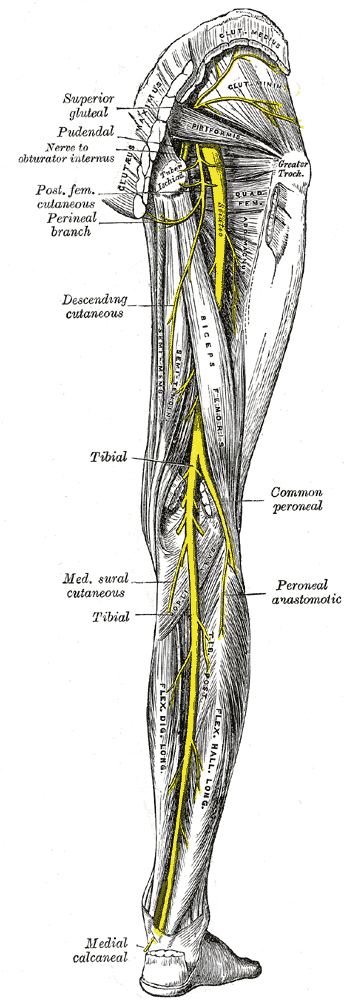
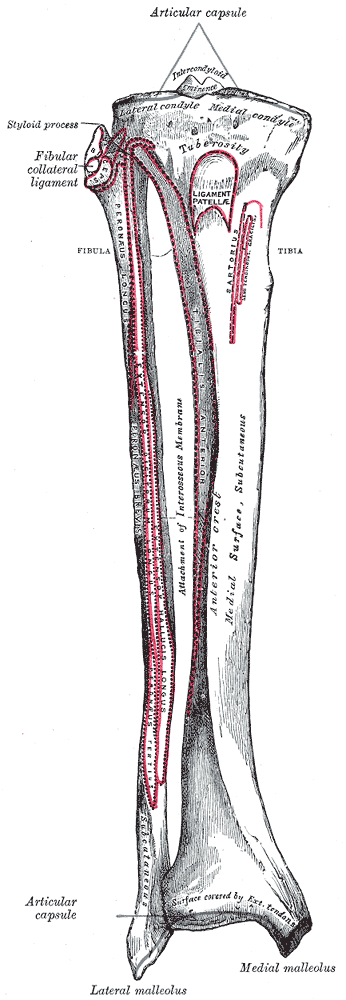

On average this takes about twenty minutes to work all the way down and back up through these features of my anatomy. There are three additional important details:
1.) In the Rossi-Cheek recipe they instruct us to instruct ourselves "Relax eyes, &c." There is an old philosophical conundrum here regarding who is talking to who when we are talking to ourselves. When you sink a long basket and you say to yourself "Good shot!", who is talking to who there? There is some implicit dissociative model like perhaps Freud's--and perhaps it is your superego talking to your ego, or something similar to that. Anyway, what I do instead of commanding myself to relax, is to invite myself to relax. I substitute "I may relax my eyes, &c." for the literal instruction provided in the Rossi-Cheek recipe.
2.) A few of these invitations are repeated, sometimes over and over. Roughly, I devote the proportion of the session along the proportions in the homunculus diagram, hence my name of homunculus meditation. I invite my fingers and my lips and my tongue to relax far more than I invite any other portion of my anatomy to do so.
3.) The other weighting is toward the eyes and ears; a large fraction of our brain is allocated to the processing of visual and audio sense information. By concentrating on the parts of the body that involve the largest brain fractions, the given twenty minutes (or whatever) of meditation can have the largest total brain footprint! That is one theory.
I have been using this meditation (or one close to it) on a nearly daily basis since 1997, since I first read Rossi and Cheek's book. I will be using it for the foreseeable future.
24 November 2010
From the Human Potential Movement Trick Bag
Suppose you have a room filled with people who do not know each other and you are going to teach them some material which requires close cooperation and clear communication. How do you begin? How do you spark a connection between these people?
An exercise that I have seen used a few times is simple and takes only a few minutes. First, pair them off; have them introduce their self to the person sitting in the next chair if they have not already done so. Second, have them write a very short autobiography--no less than six and no more than ten high and low points in their life story, focused upon the question of what events were influential in development of the person they are today. Third, partners share one high point and one low point. This can all be done in as little as ten minutes.
If the worst thing that ever happened to you was confinement and torture as a war prisoner, this might be excessively traumatic to relive with a complete stranger. You probably do not want to go overboard. You do not have to share the lowest (or highest) points in the autobiography, but it is necessary to share something. It is like a scientific fact that the process of connecting with other people requires the sharing of some intimate fact.
This group exercise was popularized by the folks involved in the Human Potential Movement, from that society of creativity and anarchy that was California in the 1960's. You can find out more details about this and many similar exercises in the short book by Sam Keen, Your Mythic Journey. This exercise is on page 69 of that book. The book is short, but if you do all the exercises in the book you can easily use up a month of free time. Sam Keen is practically the poster boy for the Human Potential Movement, having been an editor for Psychology Today magazine for many years.
I have performed my own variation on this theme, and achieved a result that was surprising to me. The first step was a construction of four idealized selves: Craig the poet, Craig the philosopher, Craig the psychologist, and Craig the theologian. (An example of this construction may be seen in the recent items that I have written on my blog here, which have alternating labels of literature, philosophy, psychology, and metaphysics.) These are hobbies. The closest thing I have to any formal training in these fields is some college course work. I have never received a paycheck for any of my activities.
After making a few notes mixing fact and fantasy, I examined my factual autobiography and extracted five high points and five low points--events in my real life which were influential in the development of the four idealized individuals. This is a good bit of data, and it took more than a couple of hours to get it all down on paper. Four selves and forty events. There was a very small amount of overlap where one event might have shown up on two or even three of the time lines. Now, here is the surprise. I went back and compared it to my real one time line autobiography, and almost none of these forty events are on there. The best thing that ever happened to me? Gone. The worst thing that ever happened to me? Vanished. For the more than the couple of hours it took me to do this exercise, those events did not even exist for all practical purposes.
An exercise that I have seen used a few times is simple and takes only a few minutes. First, pair them off; have them introduce their self to the person sitting in the next chair if they have not already done so. Second, have them write a very short autobiography--no less than six and no more than ten high and low points in their life story, focused upon the question of what events were influential in development of the person they are today. Third, partners share one high point and one low point. This can all be done in as little as ten minutes.
If the worst thing that ever happened to you was confinement and torture as a war prisoner, this might be excessively traumatic to relive with a complete stranger. You probably do not want to go overboard. You do not have to share the lowest (or highest) points in the autobiography, but it is necessary to share something. It is like a scientific fact that the process of connecting with other people requires the sharing of some intimate fact.
This group exercise was popularized by the folks involved in the Human Potential Movement, from that society of creativity and anarchy that was California in the 1960's. You can find out more details about this and many similar exercises in the short book by Sam Keen, Your Mythic Journey. This exercise is on page 69 of that book. The book is short, but if you do all the exercises in the book you can easily use up a month of free time. Sam Keen is practically the poster boy for the Human Potential Movement, having been an editor for Psychology Today magazine for many years.
I have performed my own variation on this theme, and achieved a result that was surprising to me. The first step was a construction of four idealized selves: Craig the poet, Craig the philosopher, Craig the psychologist, and Craig the theologian. (An example of this construction may be seen in the recent items that I have written on my blog here, which have alternating labels of literature, philosophy, psychology, and metaphysics.) These are hobbies. The closest thing I have to any formal training in these fields is some college course work. I have never received a paycheck for any of my activities.
After making a few notes mixing fact and fantasy, I examined my factual autobiography and extracted five high points and five low points--events in my real life which were influential in the development of the four idealized individuals. This is a good bit of data, and it took more than a couple of hours to get it all down on paper. Four selves and forty events. There was a very small amount of overlap where one event might have shown up on two or even three of the time lines. Now, here is the surprise. I went back and compared it to my real one time line autobiography, and almost none of these forty events are on there. The best thing that ever happened to me? Gone. The worst thing that ever happened to me? Vanished. For the more than the couple of hours it took me to do this exercise, those events did not even exist for all practical purposes.
19 November 2010
A portrait of the blogger as a young philosopher-III
This is the last of three posts on the nature of the first philosophy I obtained with my college education, inspired by the hoopla over the anniversary of John Lennon. Part 1 here. Part 2 here.
John Lennon was the one man who had more influence over the people of my generation than any other. This was first because of his great music, about which nothing needs to be added. This was second because of his message we took to heart, "All you need is love", &c. Third was the auto-destruct of his band, the falsity of his message, and the meaning that could be constructed from this triple whammy.
Imagine no possessions I wonder if you can. Obviously we can do this. Forager people without a permanent residence do not have possessions. At the most they have gear, which they have to carry with them almost everywhere they go. That is not too hard to imagine, or even to try out as an experiment if one is so inclined. It is possible to go even further: imagine being a gorilla or a chimpanzee or raccoon or a crow or a butterfly. Imagination is powerful stuff. Nevertheless, as a call to action, "Imagine" is no longer an inspiration to me. Imagine if everybody in the world thought like the action figure in John Lennon's anthem; I imagine that would be a pretty dull world in comparison to this messy real one that we have got.
So I conclude the message is false, even though it is a campfire singalong song that ranks up there with Kum Ba Ya.
The last thing we have is the example of his actions--the destruction of his band, the influence of his wife, the relative less quality of the post-Beatles work, and the bare naked revelations of his painful psychotherapy. The destruction of the band is a natural maneuver. I imagine it would be exhausting to be a Beatle for ten years. Good for him that he found other things he was happier doing.
Blaming Yoko for the destruction of the band and the work quality decline is popular, and it is a waste of time. For the curious, we have the psychotherapy revelations--John's mother abandoned him at age five and Yoko mothered him so we can all gawk at it if we want, but really I would rather not. It is useful to us observers as a textbook example of unsound psychotherapy. In real life I once had a friend who was fascinated with the conversations which he had with his therapist, and another far-less fascinated friend who informed him rather harshly that his conversations were sabotaging his therapy so as to render it completely ineffective.
The principle is this: what is discussed in the analysis room stays in the analysis room. Your family and friends do not need to hear about it. Your family and friends do not want to hear about it. And if you go on and on about it you are turning your therapy into performance art, which is not what your health insurance risk pool is paying for. I am sure there are many exceptions to this psychotherapy principle. I doubt that John Lennon's was one of them.
It is disappointing to read in the New York Times about anybody who is forty years old and they are making a big deal out of what happened to them when they were five years old by people who are now long dead. One time I was at a T group with a confrontational paradigm (Landmark Education Forum) and the group leader discussed a similar hypothetical case and concluded with a shout:
"Congratulations! A dead person is running your life!"
And it is very disappointing when this dude you are reading about in the New York Times is the most influential single man for your entire generation of peers. I guess that John and Yoko would have a hard time imagining that.
John Lennon was the one man who had more influence over the people of my generation than any other. This was first because of his great music, about which nothing needs to be added. This was second because of his message we took to heart, "All you need is love", &c. Third was the auto-destruct of his band, the falsity of his message, and the meaning that could be constructed from this triple whammy.
Imagine no possessions I wonder if you can. Obviously we can do this. Forager people without a permanent residence do not have possessions. At the most they have gear, which they have to carry with them almost everywhere they go. That is not too hard to imagine, or even to try out as an experiment if one is so inclined. It is possible to go even further: imagine being a gorilla or a chimpanzee or raccoon or a crow or a butterfly. Imagination is powerful stuff. Nevertheless, as a call to action, "Imagine" is no longer an inspiration to me. Imagine if everybody in the world thought like the action figure in John Lennon's anthem; I imagine that would be a pretty dull world in comparison to this messy real one that we have got.
So I conclude the message is false, even though it is a campfire singalong song that ranks up there with Kum Ba Ya.
The last thing we have is the example of his actions--the destruction of his band, the influence of his wife, the relative less quality of the post-Beatles work, and the bare naked revelations of his painful psychotherapy. The destruction of the band is a natural maneuver. I imagine it would be exhausting to be a Beatle for ten years. Good for him that he found other things he was happier doing.
Blaming Yoko for the destruction of the band and the work quality decline is popular, and it is a waste of time. For the curious, we have the psychotherapy revelations--John's mother abandoned him at age five and Yoko mothered him so we can all gawk at it if we want, but really I would rather not. It is useful to us observers as a textbook example of unsound psychotherapy. In real life I once had a friend who was fascinated with the conversations which he had with his therapist, and another far-less fascinated friend who informed him rather harshly that his conversations were sabotaging his therapy so as to render it completely ineffective.
The principle is this: what is discussed in the analysis room stays in the analysis room. Your family and friends do not need to hear about it. Your family and friends do not want to hear about it. And if you go on and on about it you are turning your therapy into performance art, which is not what your health insurance risk pool is paying for. I am sure there are many exceptions to this psychotherapy principle. I doubt that John Lennon's was one of them.
It is disappointing to read in the New York Times about anybody who is forty years old and they are making a big deal out of what happened to them when they were five years old by people who are now long dead. One time I was at a T group with a confrontational paradigm (Landmark Education Forum) and the group leader discussed a similar hypothetical case and concluded with a shout:
"Congratulations! A dead person is running your life!"
And it is very disappointing when this dude you are reading about in the New York Times is the most influential single man for your entire generation of peers. I guess that John and Yoko would have a hard time imagining that.
14 November 2010
A coincidence in my literary life
In October of 2002 I experienced a spooky coincidence that I can recall as if it happened yesterday. It concerned a woman, a poem, two poets, and a spree killer.
The woman is named Kim and in October of 2002 she was a waitress in my favorite sports bar. I had a regular poetry night downtown which started at 9:00 P.M. Between the end of my work and the beginning of my poetry I had a couple hours to kill, so every Tuesday night I went to this place and got a cheeseburger and a couple of beers and polished up my poem for the reading later in the night. After a few months of this routine, one of the waitresses asks me about my poems that I am always working on. We talked about poetry for a few minutes and I asked her "would you like me to write you a poem?"
She replied with an enthusiastic, "Yes!" So I got to work on it the next day. And I spent nearly all of Saturday and Sunday writing it and rewriting it and then illustrating it. There were five stanzas, five pages, five illustrations. One of the lines was:
There are no negroes in my tarot deck except maybe Death and the Devil
This page had on it my own drawing of the Devil card. Unknown to me at the time of my writing my poem for my suddenly favorite waitress, the Death card was going to be on the front cover of Time and Newsweek magazine in four days. The second of October 2002 was the day that John Allen Muhammad left a Death card at the scene of one of his murders. By Tuesday this news was all over the place. This is the central coincidence in my tale, but it is not the only one.
There were also two poets who had coincidental connections to my poem. I used a trope which is not uncommon but which I learned from a friend of mine, Dennis Tyler, where all five stanzas had very slight variation in their final line. The final line of each stanza went like:
She is X and I do not know her name
(X=laughing, crying, dying, &c. Sort of a true fact as I still did not know the woman's last name.)
On the day when I wrote this Dennis had been absent from our shows for many months, but on that Tuesday he showed up. It was a pleasant surprise when he walked into the venue shortly before it was my turn to get up onto the stage.
The other (small) coincidence was the hostess of the show that night was a person whom I had never met and never heard of, named Eve. The biblical Eve also was a character in my poem. All of this put me into an excited state when I was going up there onto the stage. I can still remember talking to the audience, before I read my poem, about all these strange coincidences that I had stumbled into. It was the first time I ever read before that audience that I had a total grip on them all and I had not even begun to read yet. Then I read and it went swell. It was something of a transformation of my relationship to that entire group of people. Before, I was almost like an interloper; and after, I really belonged in that group.
Later I was explaining to a friend of mine the story of the episode, how I actually lost almost all of my stage fright in one minute and it was a complete accident. She insisted it was not an accident, there are no accidents. Her preferred explanation was something on the order of there was a cosmic force injecting the Death card into the human world and me and Muhammad were on the same channel. What happened was quite weird enough without cosmic forces channeling into me and this other guy across the country on the same day.
The woman is named Kim and in October of 2002 she was a waitress in my favorite sports bar. I had a regular poetry night downtown which started at 9:00 P.M. Between the end of my work and the beginning of my poetry I had a couple hours to kill, so every Tuesday night I went to this place and got a cheeseburger and a couple of beers and polished up my poem for the reading later in the night. After a few months of this routine, one of the waitresses asks me about my poems that I am always working on. We talked about poetry for a few minutes and I asked her "would you like me to write you a poem?"
She replied with an enthusiastic, "Yes!" So I got to work on it the next day. And I spent nearly all of Saturday and Sunday writing it and rewriting it and then illustrating it. There were five stanzas, five pages, five illustrations. One of the lines was:
There are no negroes in my tarot deck except maybe Death and the Devil
This page had on it my own drawing of the Devil card. Unknown to me at the time of my writing my poem for my suddenly favorite waitress, the Death card was going to be on the front cover of Time and Newsweek magazine in four days. The second of October 2002 was the day that John Allen Muhammad left a Death card at the scene of one of his murders. By Tuesday this news was all over the place. This is the central coincidence in my tale, but it is not the only one.
There were also two poets who had coincidental connections to my poem. I used a trope which is not uncommon but which I learned from a friend of mine, Dennis Tyler, where all five stanzas had very slight variation in their final line. The final line of each stanza went like:
She is X and I do not know her name
(X=laughing, crying, dying, &c. Sort of a true fact as I still did not know the woman's last name.)
On the day when I wrote this Dennis had been absent from our shows for many months, but on that Tuesday he showed up. It was a pleasant surprise when he walked into the venue shortly before it was my turn to get up onto the stage.
The other (small) coincidence was the hostess of the show that night was a person whom I had never met and never heard of, named Eve. The biblical Eve also was a character in my poem. All of this put me into an excited state when I was going up there onto the stage. I can still remember talking to the audience, before I read my poem, about all these strange coincidences that I had stumbled into. It was the first time I ever read before that audience that I had a total grip on them all and I had not even begun to read yet. Then I read and it went swell. It was something of a transformation of my relationship to that entire group of people. Before, I was almost like an interloper; and after, I really belonged in that group.
Later I was explaining to a friend of mine the story of the episode, how I actually lost almost all of my stage fright in one minute and it was a complete accident. She insisted it was not an accident, there are no accidents. Her preferred explanation was something on the order of there was a cosmic force injecting the Death card into the human world and me and Muhammad were on the same channel. What happened was quite weird enough without cosmic forces channeling into me and this other guy across the country on the same day.
Subscribe to:
Posts (Atom)
About Craig

- Craig
- Houston, Texas, United States
- I have been living in the lovely neighborhood of Spring Branch in the great city of Houston since late in 2005. I started out with the idea of making this blog about my life in this neighborhood. That did not last long. Right now I am posting every five days on the alternating topics of literature, philosophy, psychology, and metaphysics. This project has been ongoing since July 27, 2010 and I believe it will continue for at least a few more months.